This past Saturday the 10th, the Trail Sustainability Institute (TSI) brought rock work to life on the Ouroboros Trail in Cascade Locks with a hands-on Rock Work and Armoring clinic that was equal parts education, sweat, and puzzling stones together. Volunteers were joined by guest instructor Shane Wilson of Trailhaus, whose depth of experience as a professional trail planner and designer added invaluable perspective to the day. Alongside TSI instructors Nancy Stone and Paul Hobson, Shane helped guide participants through not just how to move and place rock, but why thoughtful stonework matters for long-term trail sustainability and rider experience.
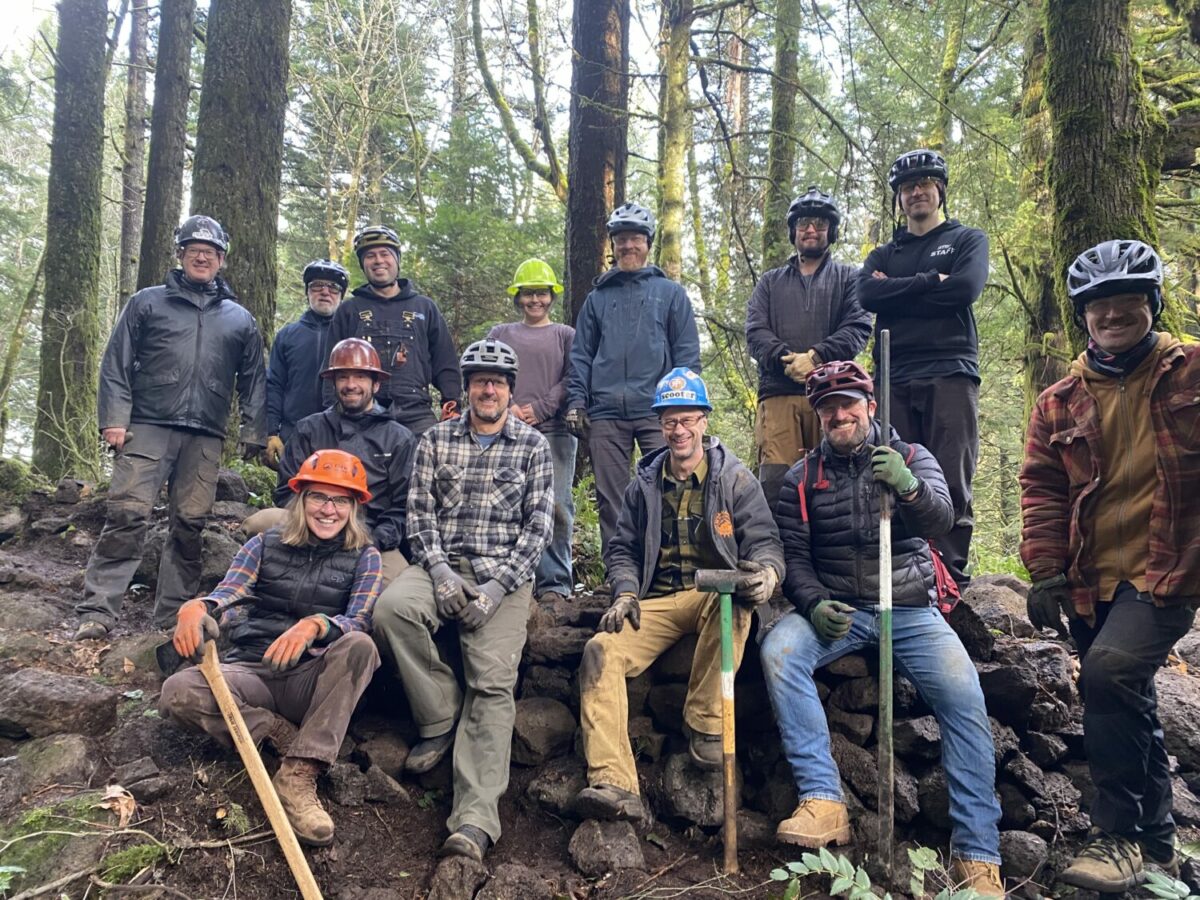
The day kicked off, as all good rock clinics should, with a heavy emphasis on safety, safety, safety. From proper body mechanics and communication to pinched fingers, crushed toes, and eye protection, volunteers learned how to work smart before working hard. With those foundations in place, the group dove into the art of “rock shopping,” spreading out into the surrounding forest to source the right stone while protecting natural resources and minimizing visual impacts. Participants discussed rock shape, size, and weight estimation, learning that quality stonework often means spending as much time finding rock as placing it, and that rushing this step is a recipe for failure.
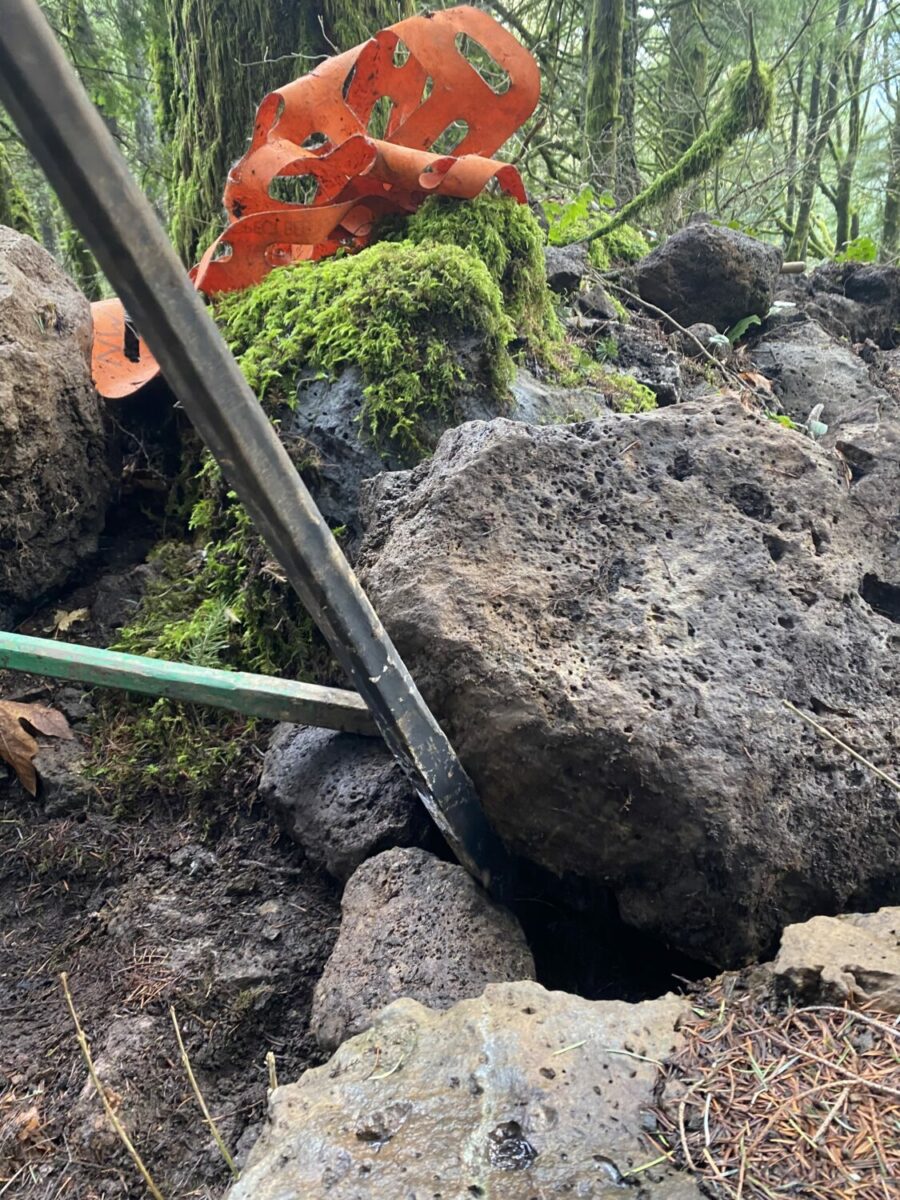
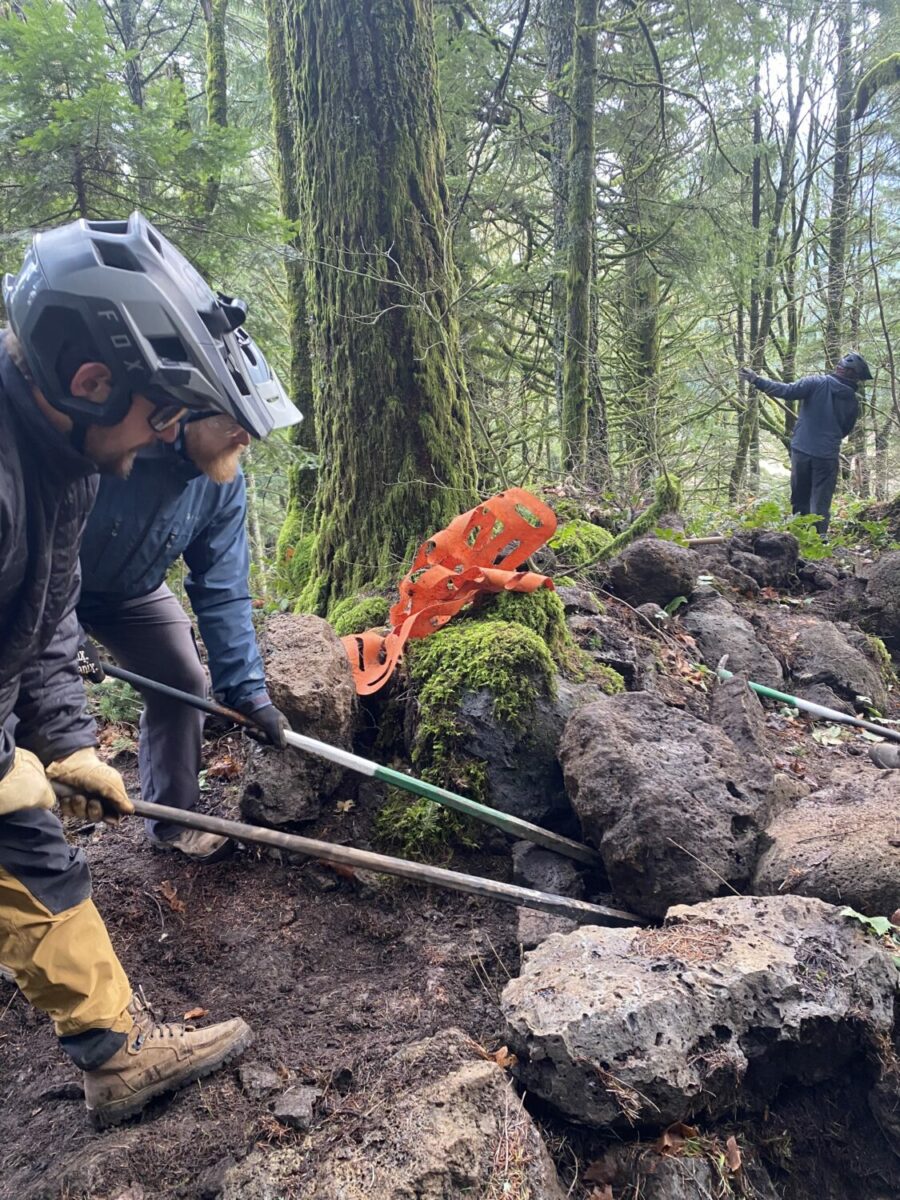
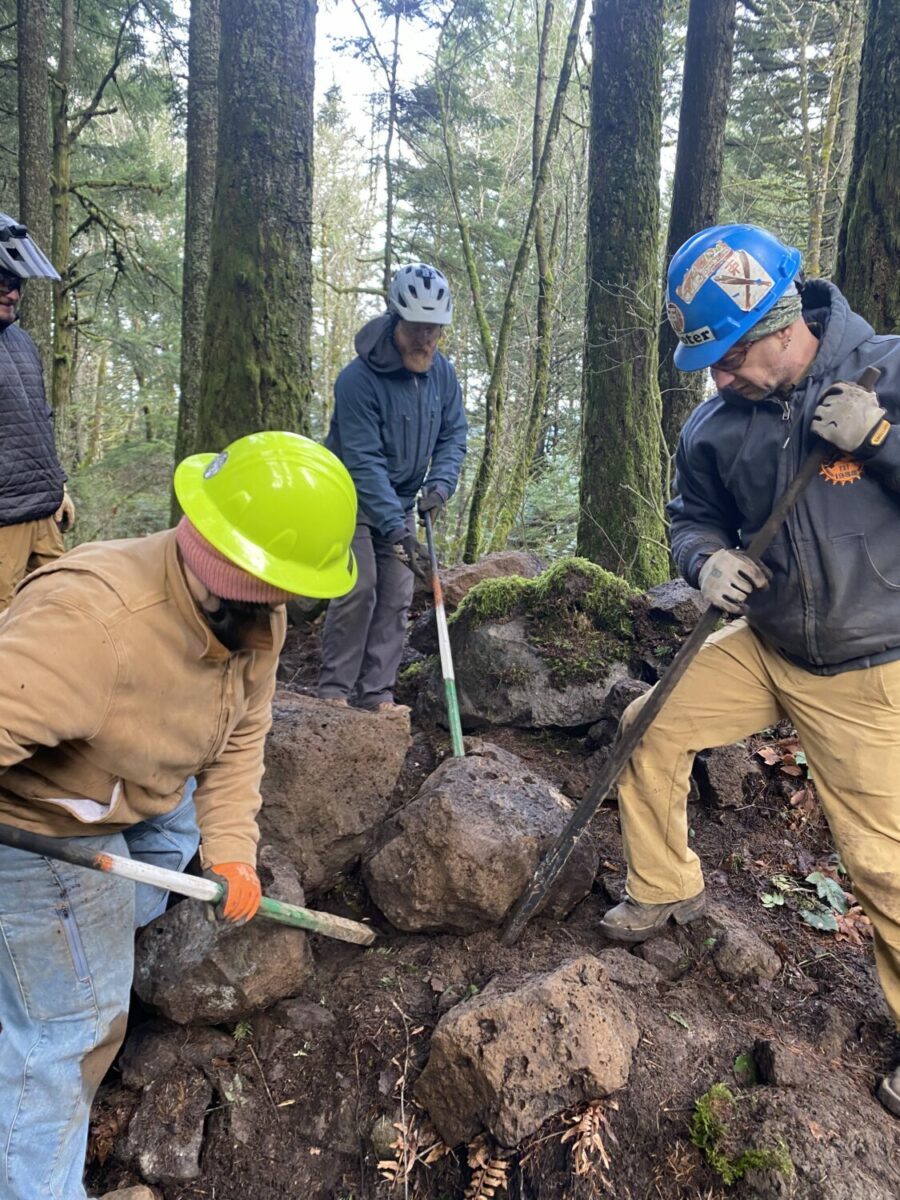
With rocks selected, it was time to move them. Volunteers practiced using rock bars, fulcrums, and rock nets, breaking into groups to safely maneuver stones that were well beyond single-person lifts. Along the way, they experimented with techniques like rowing rocks, floating buried stones, and using mechanical advantage to let physics do the heavy lifting. A nostalgic moment came when volunteers channeled their inner Barney Rubble, wielding sledges and double jacks to turn oversized rock into angular “rock crush” for backfill, critical for locking stones in place and creating durable tread.
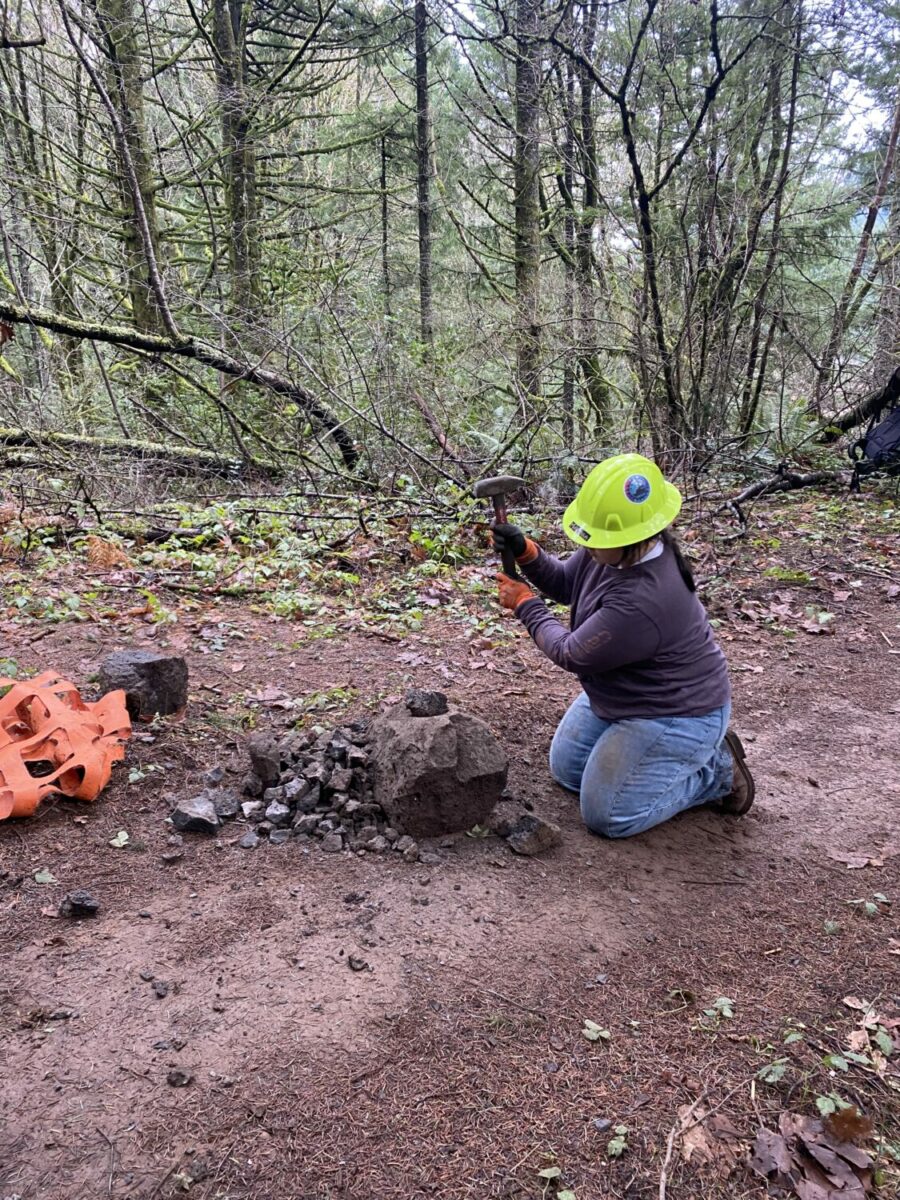
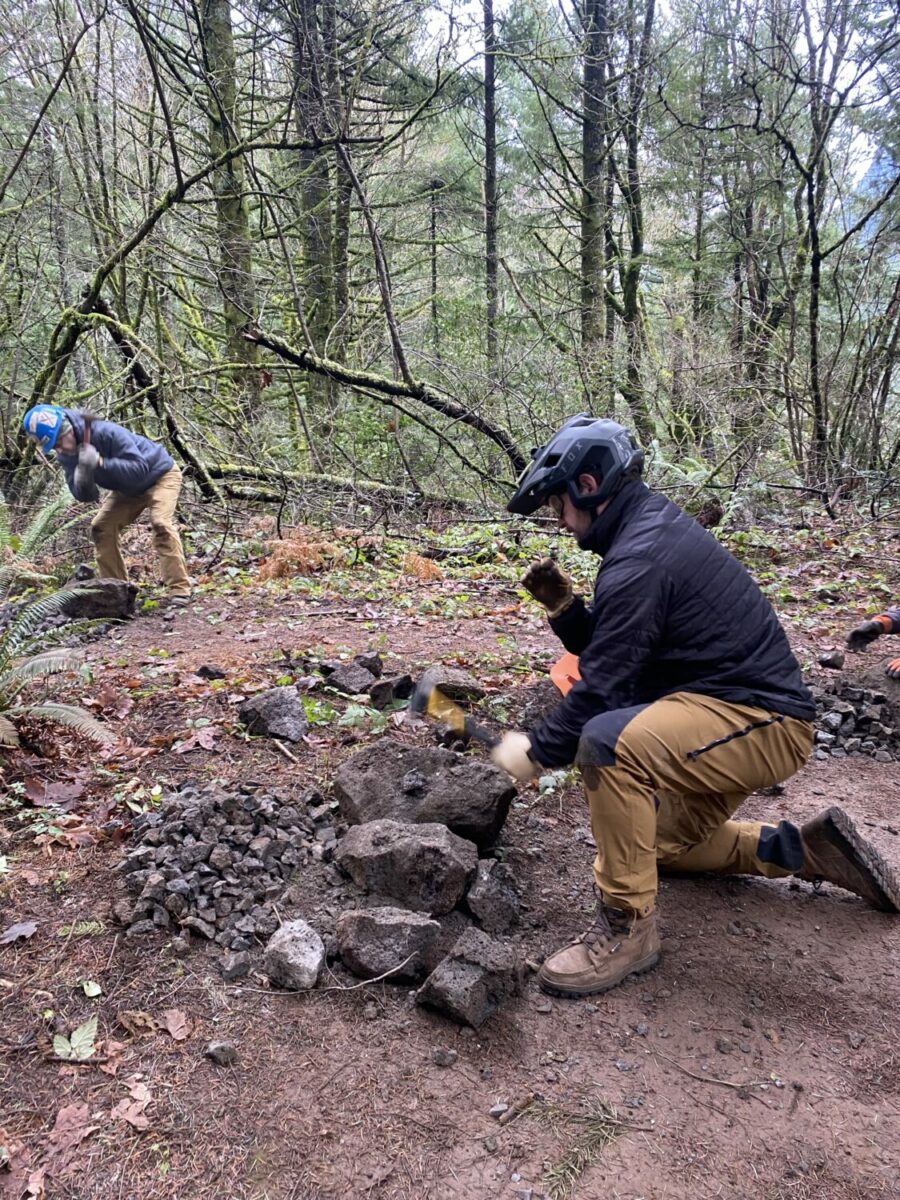
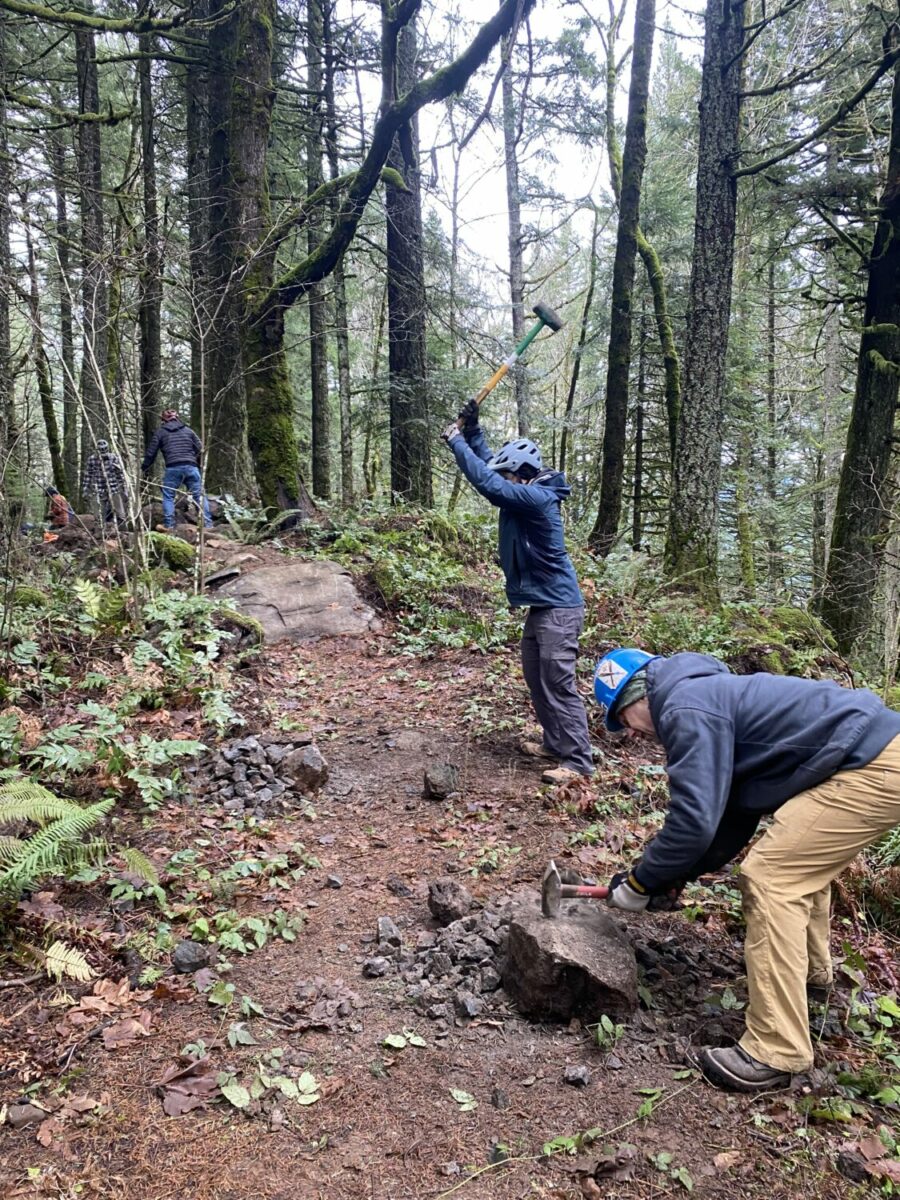
All of these skills were put to work on a 75-foot-long alternate line paralleling the existing green-rated trail. Designed as a spicier, more progressive option, the feature incorporates stone pitching and armoring techniques, with careful attention to rock orientation, batter angles, and gravel backfill. Volunteers pitched rocks on edge, buried them deep for strength, and worked methodically to create a solid riding surface that will stand up to time, weather, and wheels. While there’s still plenty of work to do before the line is ready to ride, the foundation has been set, both in stone and in skill.
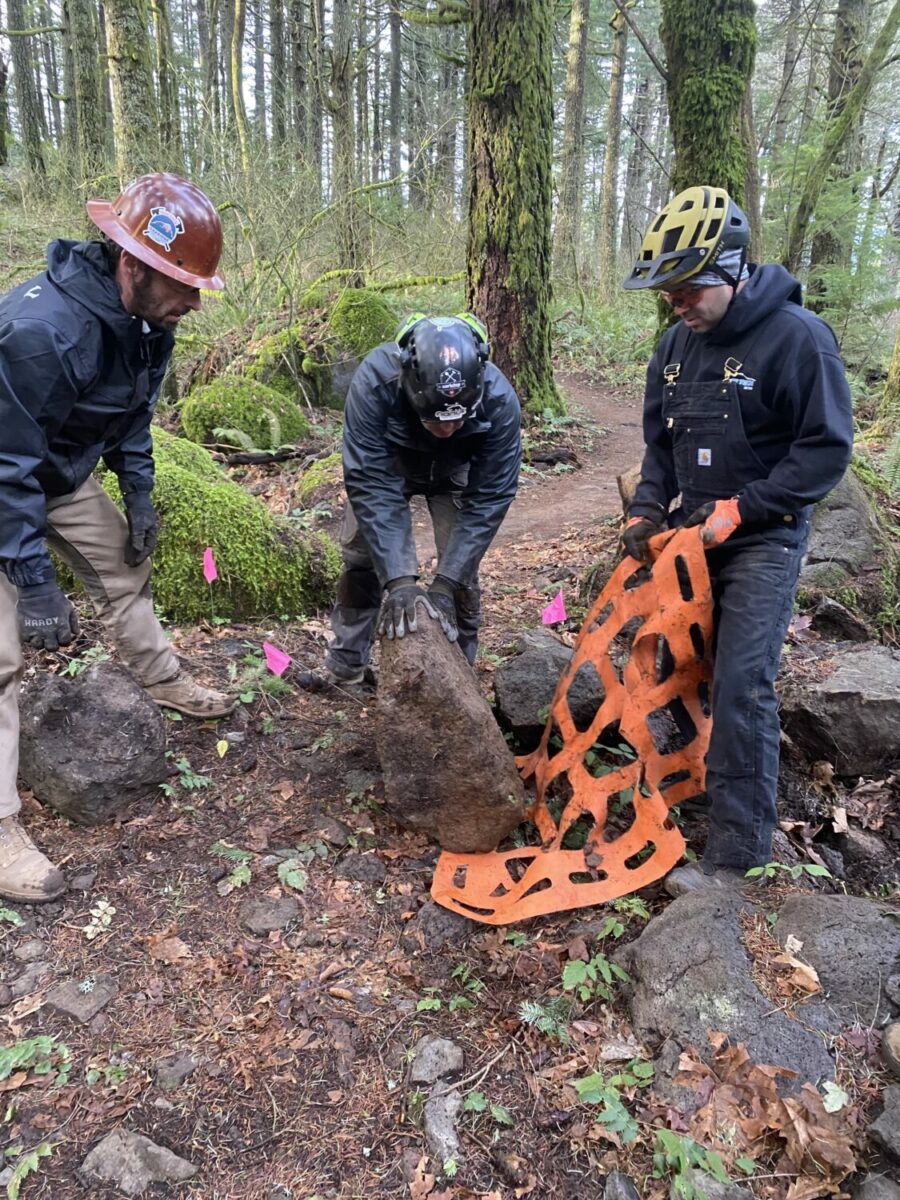
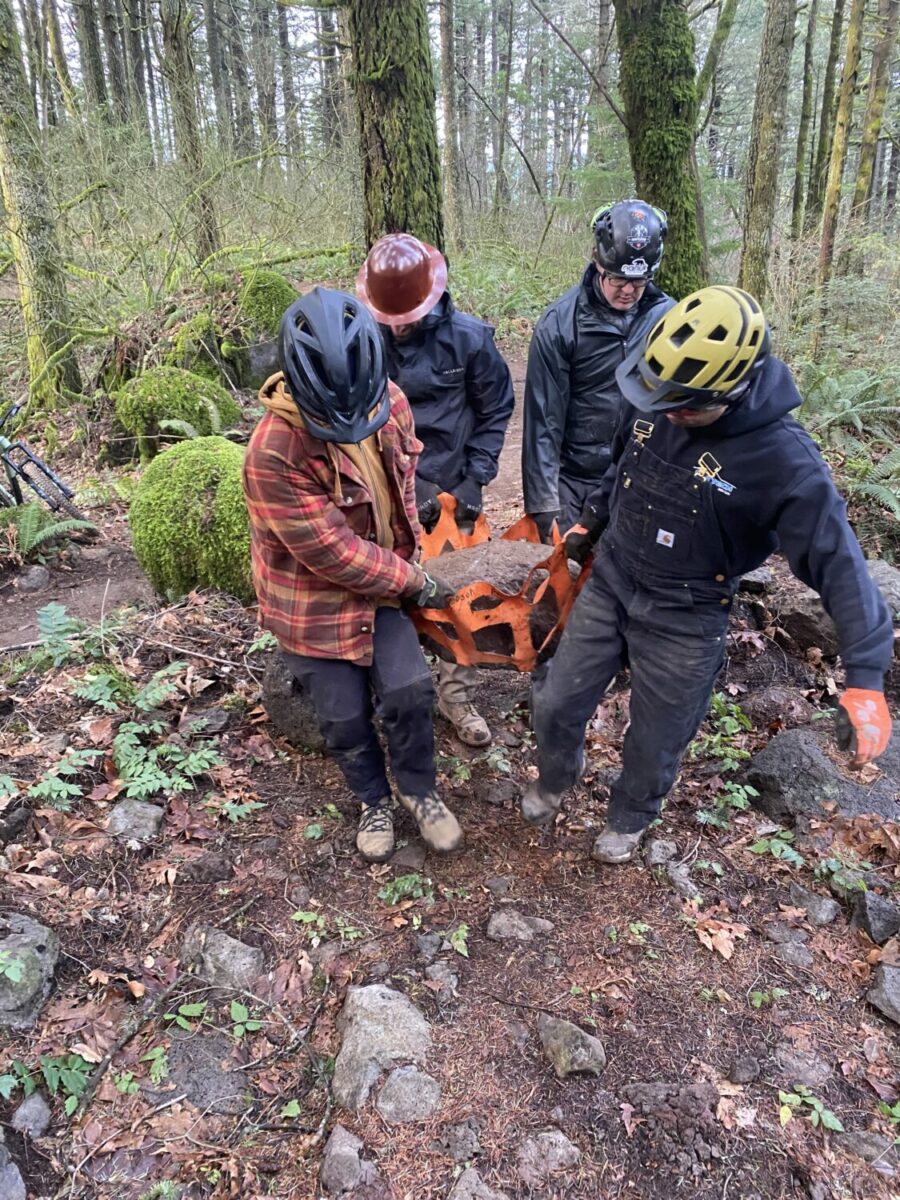
By the end of the day, NWTA walked away with 13 newly skilled volunteers who now understand the principles behind high-quality rock work and armoring. This is where TSI sees the true ripple effect: as these volunteers bring their knowledge back to dig days, share techniques with others, and raise the bar for trail construction across the region. The result is better-built trails, better riding experiences, and a stronger stewardship community, helping make the Northwest an exceptional place to mountain bike, one carefully placed rock at a time.If you are interested in an Advanced Trail School experience, join us at Hagg Lake in February, where we will be teaching Trail Building: Start to Finish. Sign up here.