On November 14, Northwest Trail Alliance (NWTA) continued its commitment to healthier forests and more sustainable trails with our first native shrub and wildflower planting at Rocky Point Trails in the Tualatin Mountain Forest.
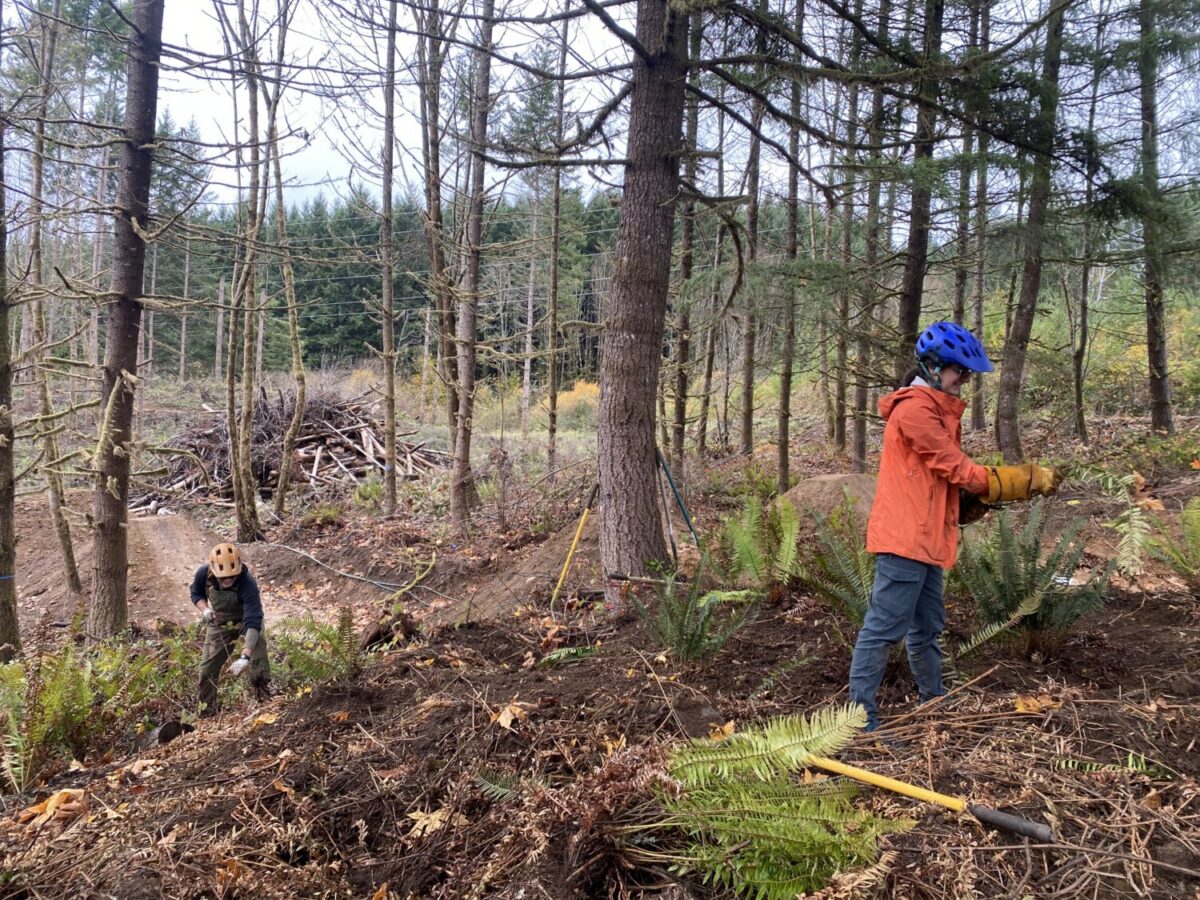
Made possible through a powerhouse collaboration with Oregon State University Extension, Scappoose Bay Watershed Council, Columbia Soil & Water Conservation District, and West Multnomah Soil & Water Conservation District, the event brought together 14 volunteers for a hands-on day of learning, planting, and ecological restoration.
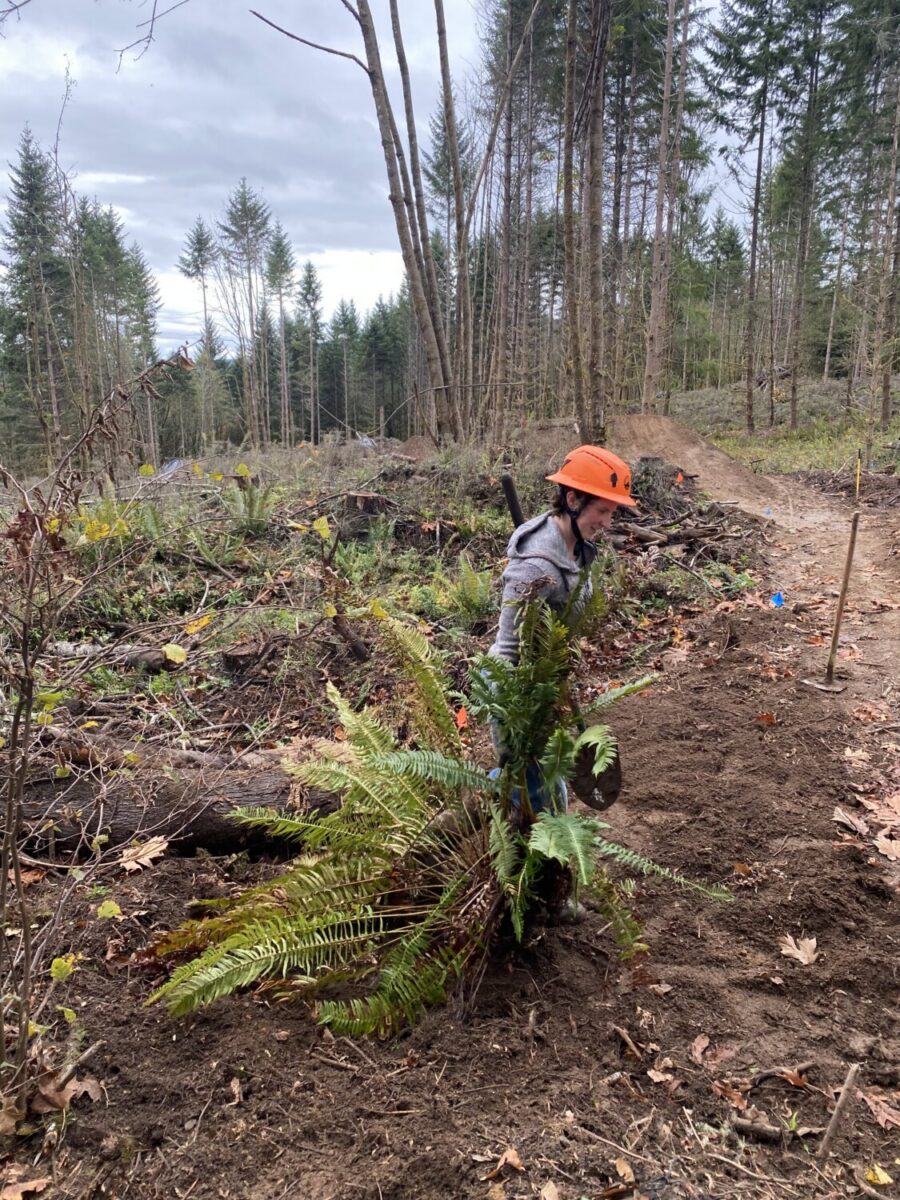
Volunteers learned how to identify native plants growing on-site and take cuttings for propagation, including blue elderberry, salmonberry, red-flowering currant, vine maple, thimbleberry, and hazelnut, among others. Using rooting hormone to encourage successful establishment, the group propagated these cuttings while also carefully digging up and transplanting sword ferns, salal, and Oregon grape.
The focus of the day’s work was the trail corridor surrounding Hop, Seth and a Jump, a jump line currently being rebuilt following a recent timber harvest. Disturbed ground can be vulnerable to erosion and invasive plant encroachment, making revegetation an important part of responsible trail development. By reintroducing native shrubs and understory plants, we’re helping stabilize the soil, restore habitat, and give native vegetation a better chance to compete with the Himalayan blackberries that have historically dominated this area.
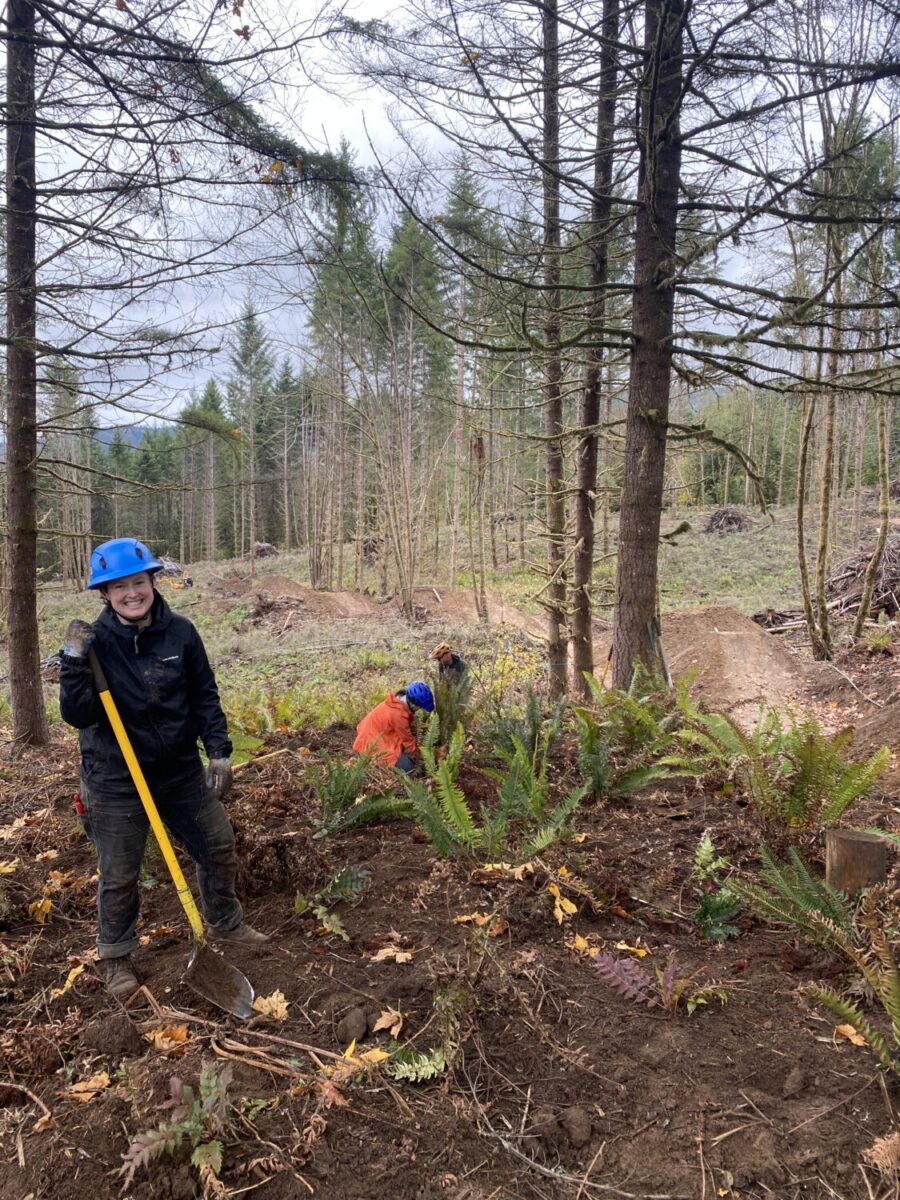
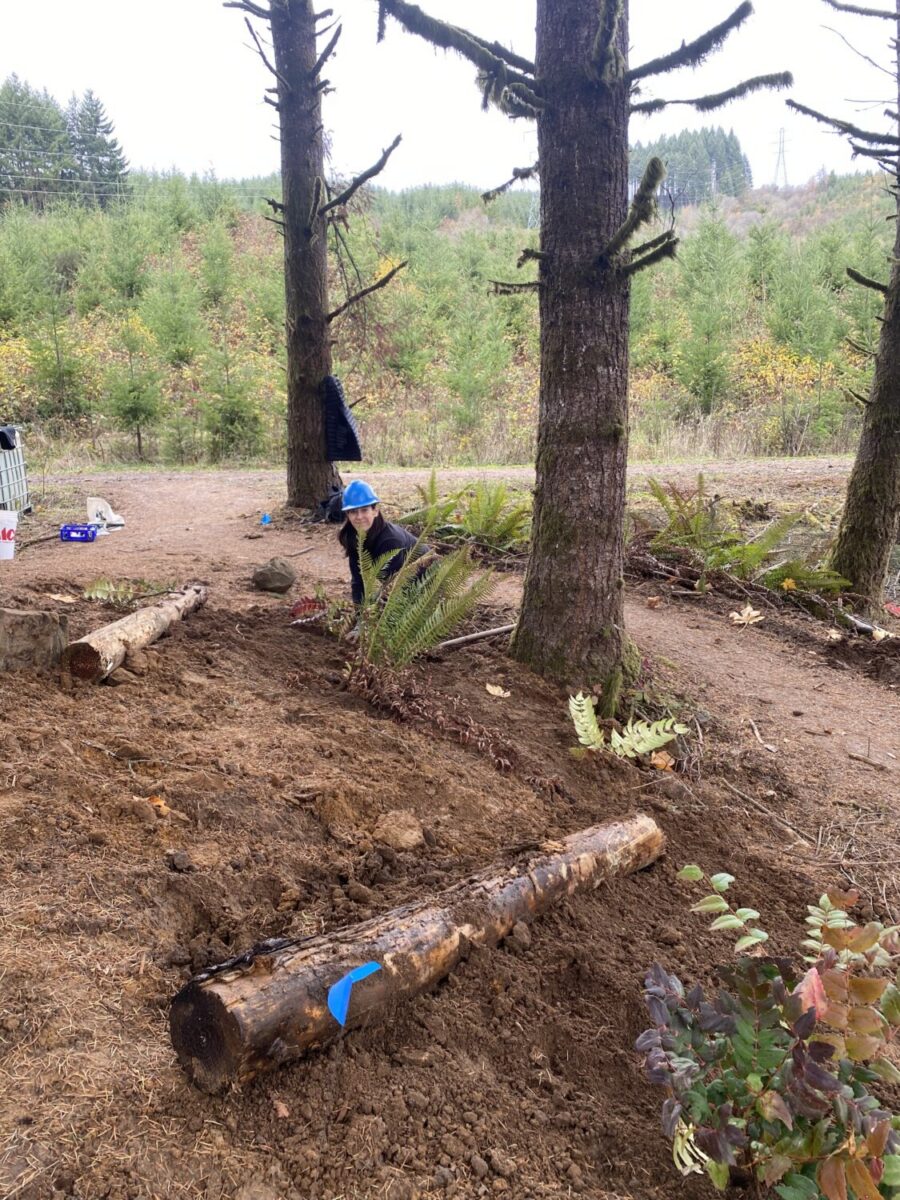
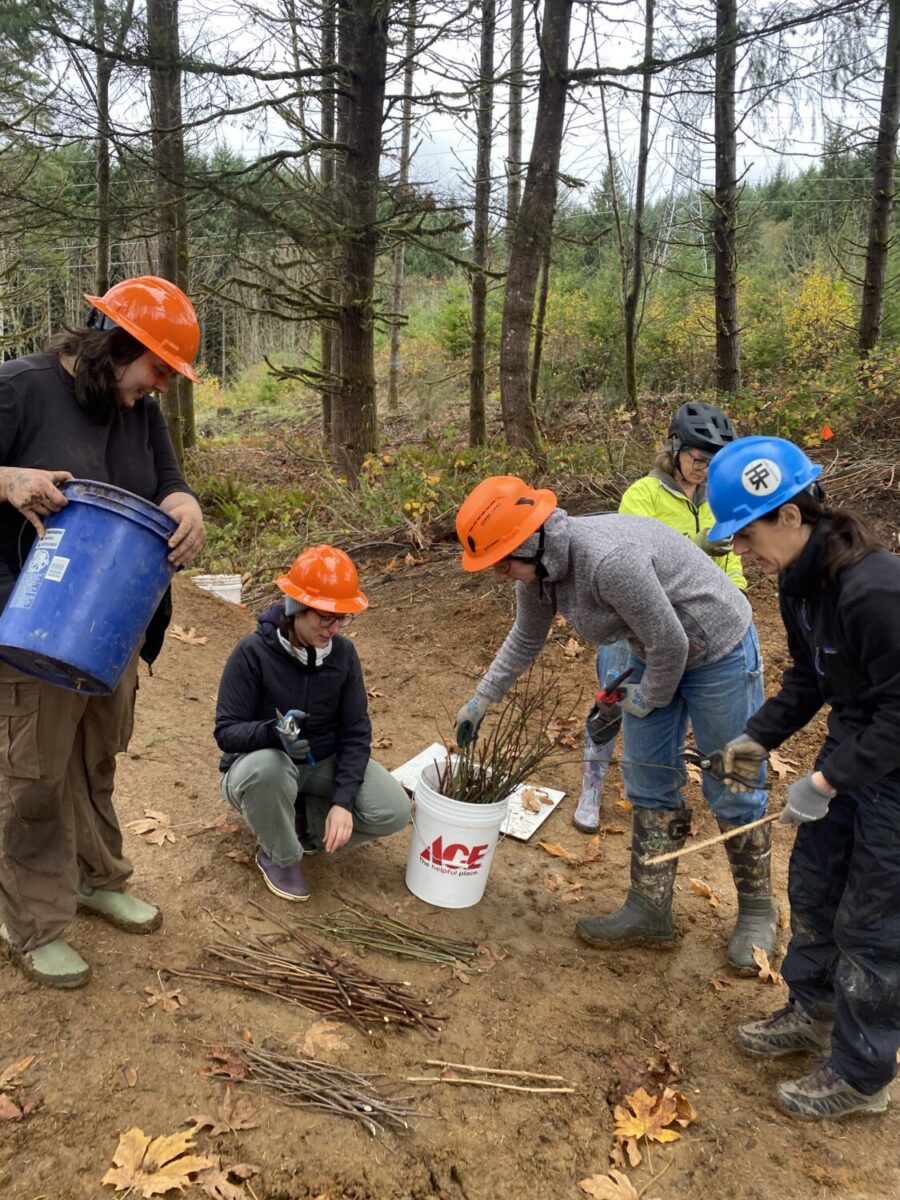
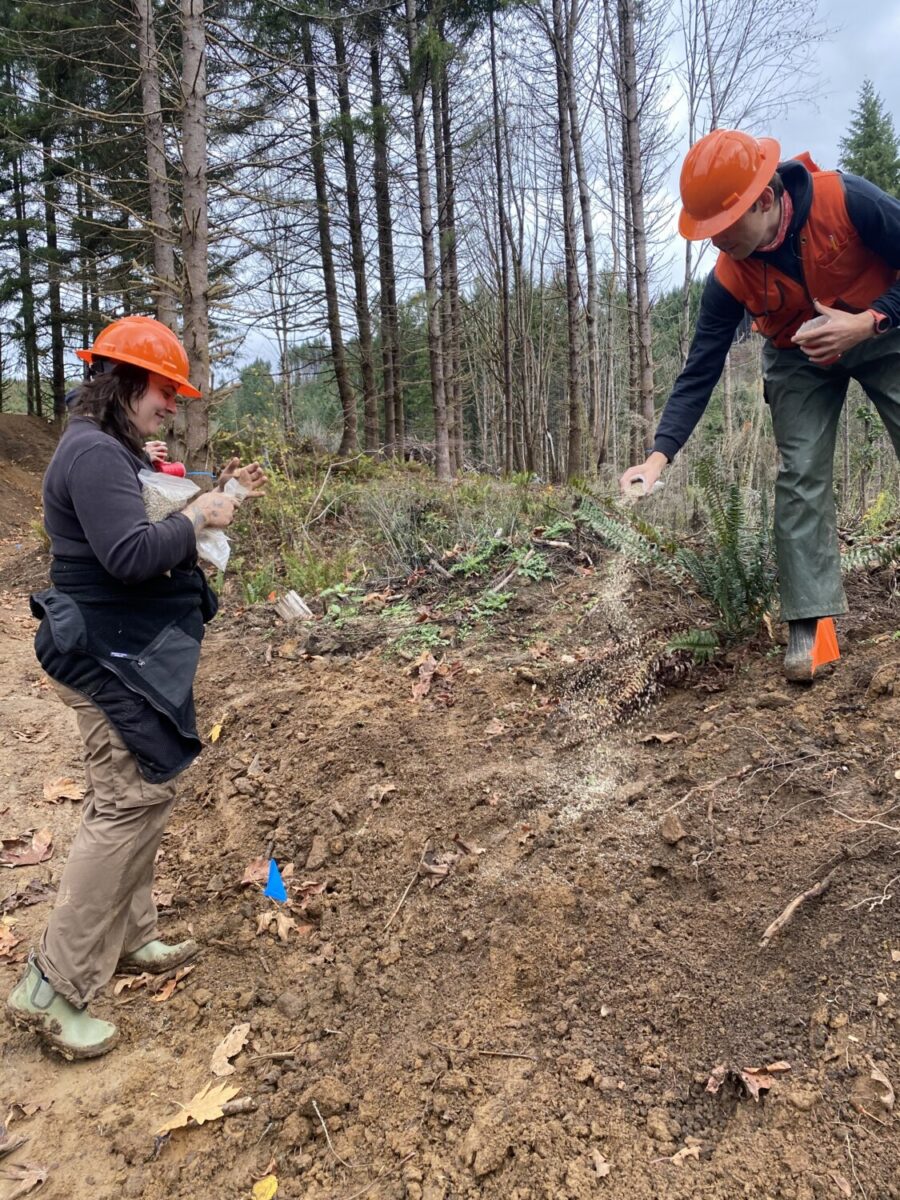
To finish the day, volunteers spread a diverse mix of native wildflower seeds throughout the corridor, adding another layer to the restoration effort. We’re excited to see what takes root and just how beautiful this stretch of trail will become when spring arrives!
For NWTA, a trail is about much more than a brown ribbon of dirt winding through the forest. Trails exist within larger ecosystems, and the decisions we make when designing, building, and maintaining them have an impact far beyond the trail itself. We believe recreation and conservation don’t have to compete. With thoughtful planning, responsible practices, and the right partnerships, they can work together to create healthier forests and better outdoor experiences.
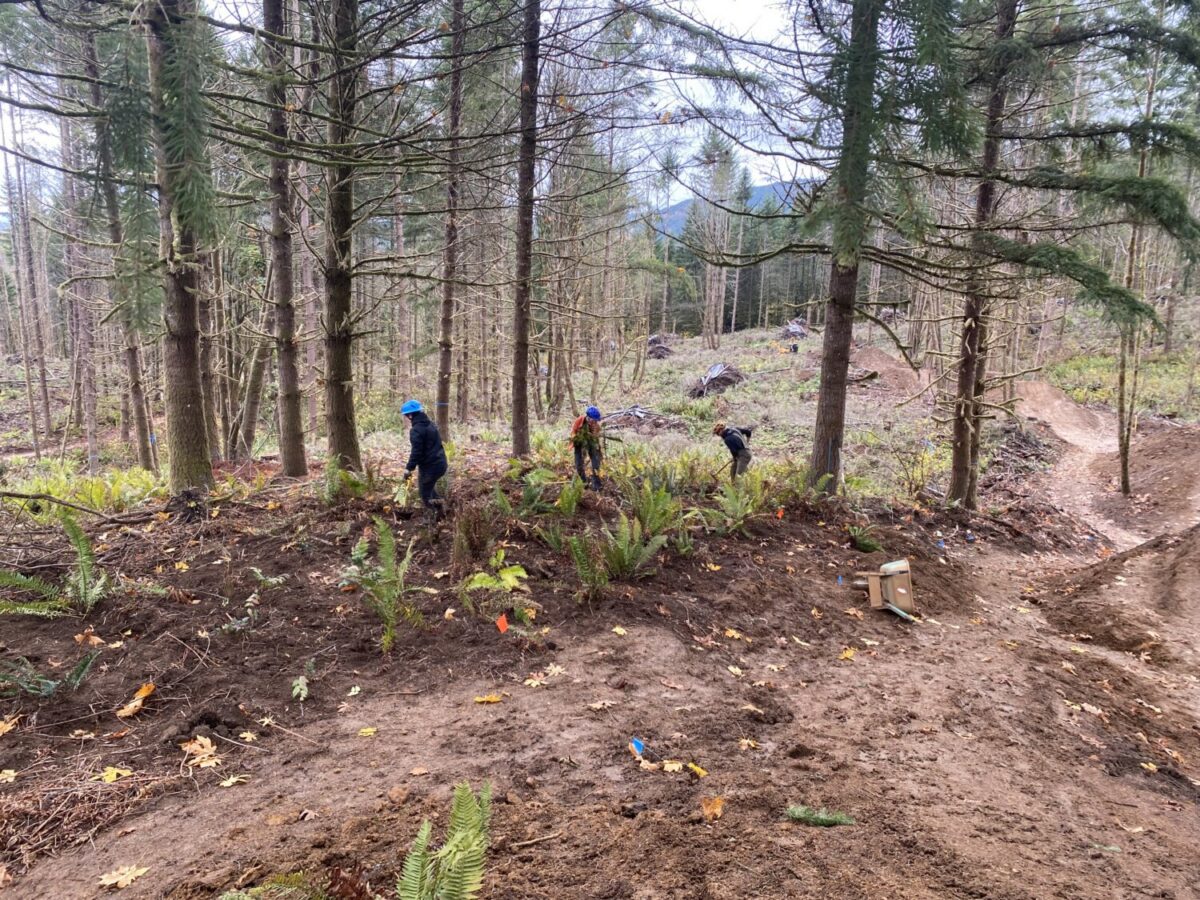
That’s the kind of trail stewardship we’re committed to advancing. Collaborations with organizations like OSU Extension, Scappoose Bay Watershed Council, and our local Soil & Water Conservation Districts bring invaluable ecological expertise to this work and help turn our commitment to sustainable trails into meaningful, on-the-ground action.
We’re incredibly grateful to our partners and the 14 volunteers who made this first planting possible. This is just the beginning! If you’d like to be part of this kind of work, stay tuned for round two, which we’ll be organizing once trail construction is complete.
Here’s to trails that give back to the forests they pass through!